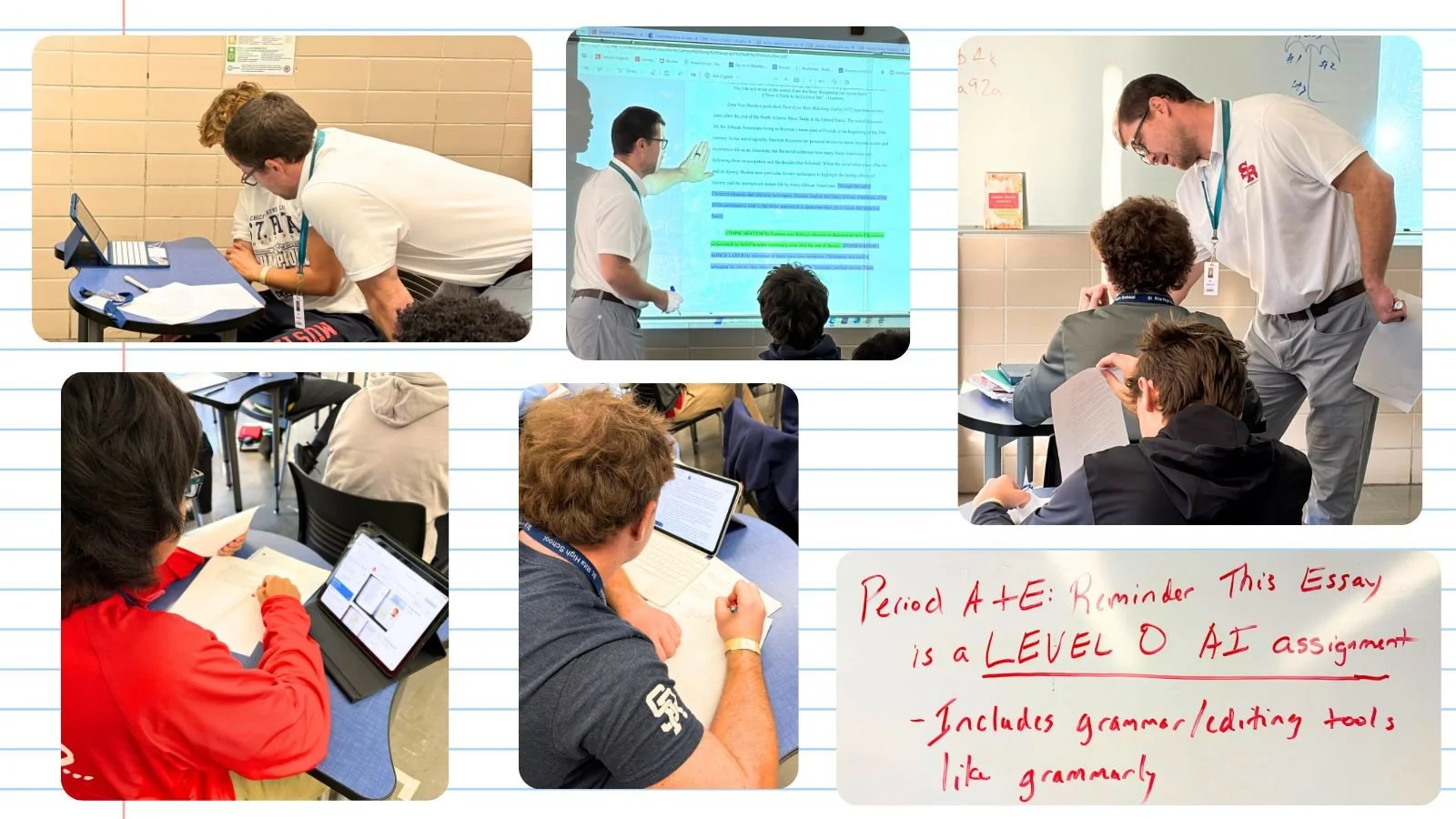
Each month, we highlight the engaging lessons and dynamic classroom experiences shaping our Ritamen. Through hands-on activities and academic exploration, these moments capture how our Ritamen are challenged and inspired in the classroom. This month’s recap features activities from our Spanish, U.S. History, Honors Geometry, Spanish Heritage II, Physical Education, Chemistry, Psychology, World History, and Honors English II classes.
Day of the Dead
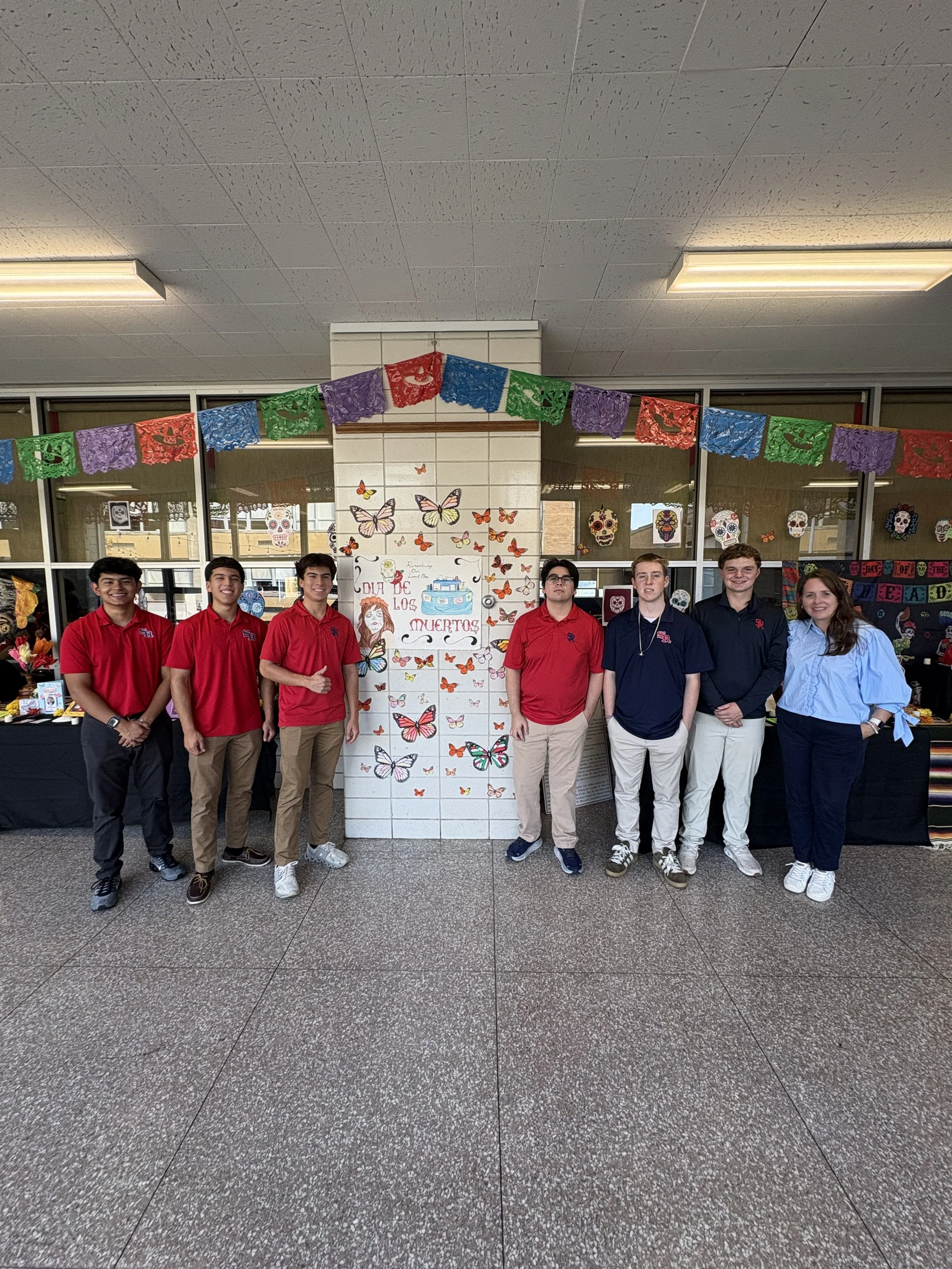
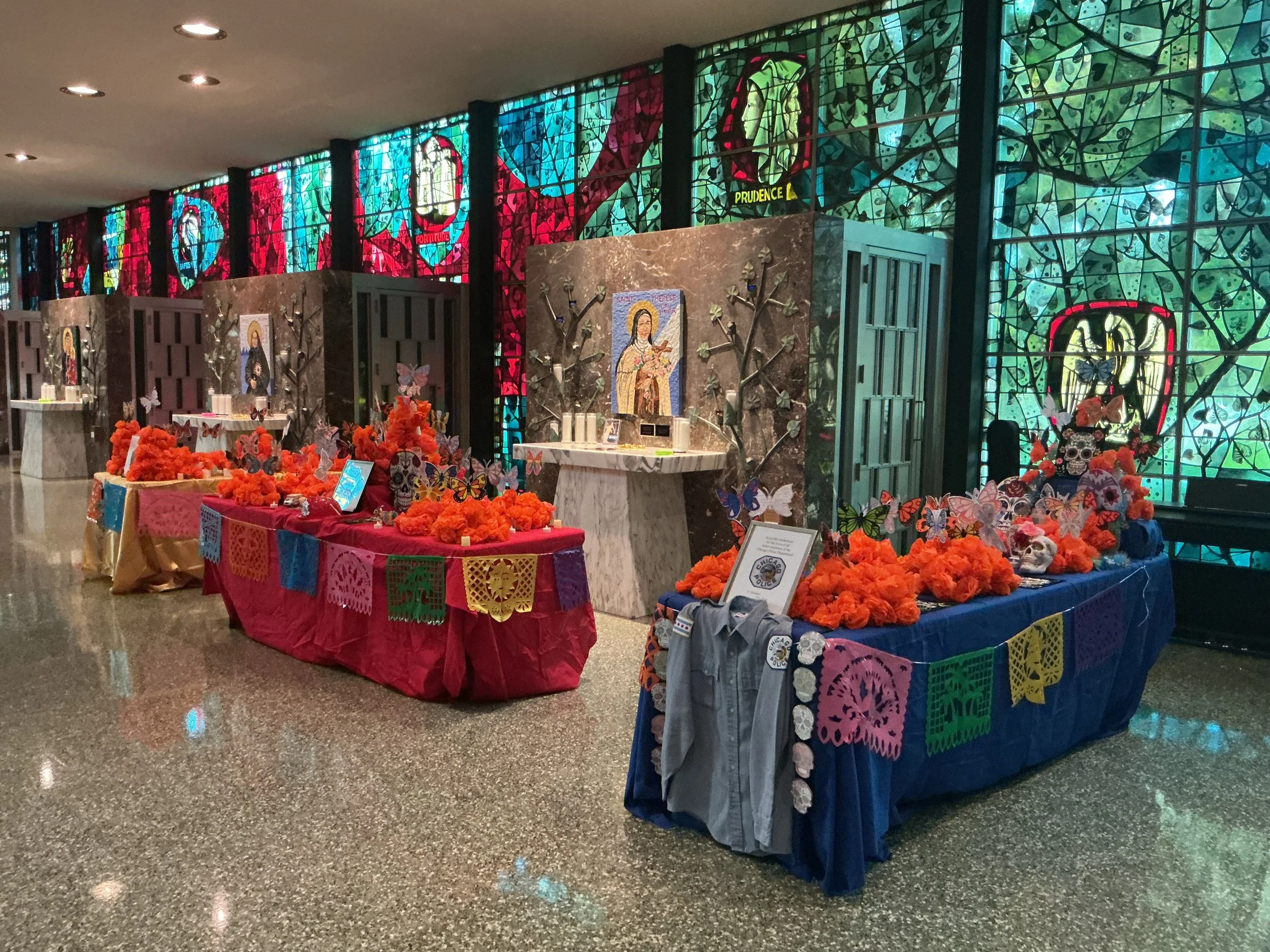
Our Spanish Club prepared their annual St. Rita ofrenda (altar). Every year, students, faculty, and staff place photographs and items of their deceased loved ones on the ofrenda for our St. Rita Family to remember. The club also created beautiful monarch butterflies, which symbolize the spirits of deceased relatives returning to visit.
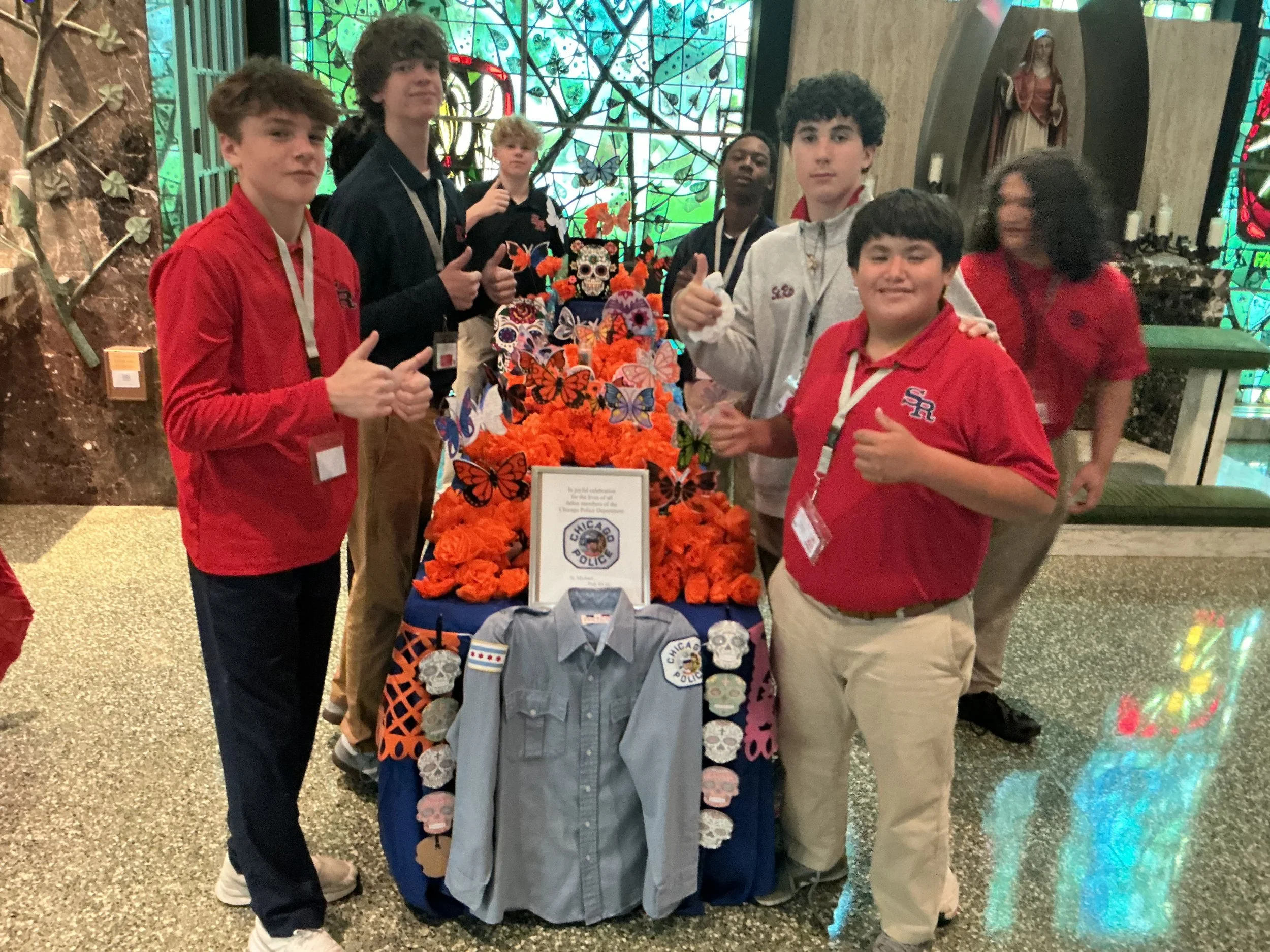
Mr. Bogucki’s Spanish 1 classes created ofrendas to remember the fallen members of the Chicago Police Department, the Chicago Fire Department, and the armed services from Illinois.
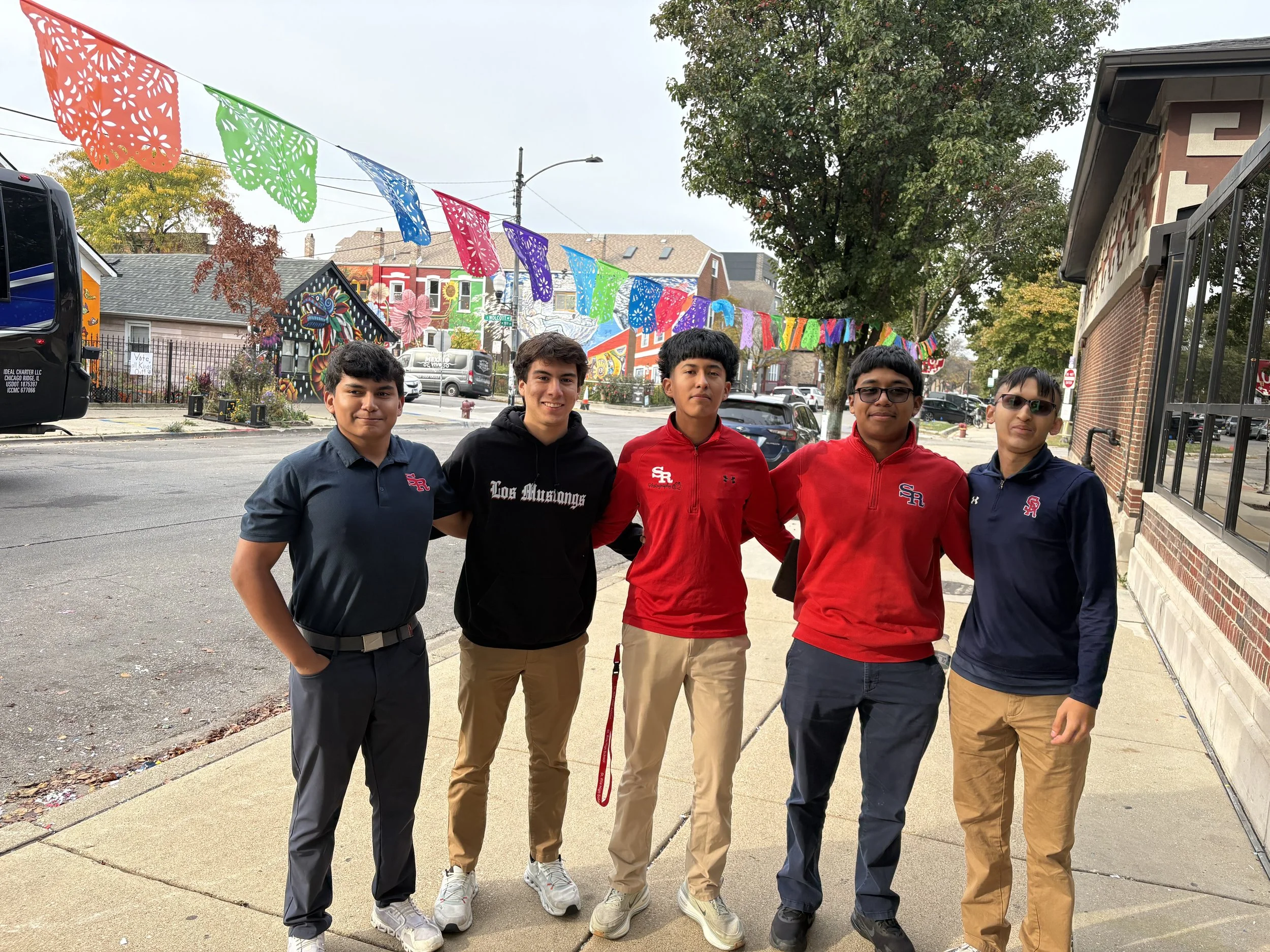
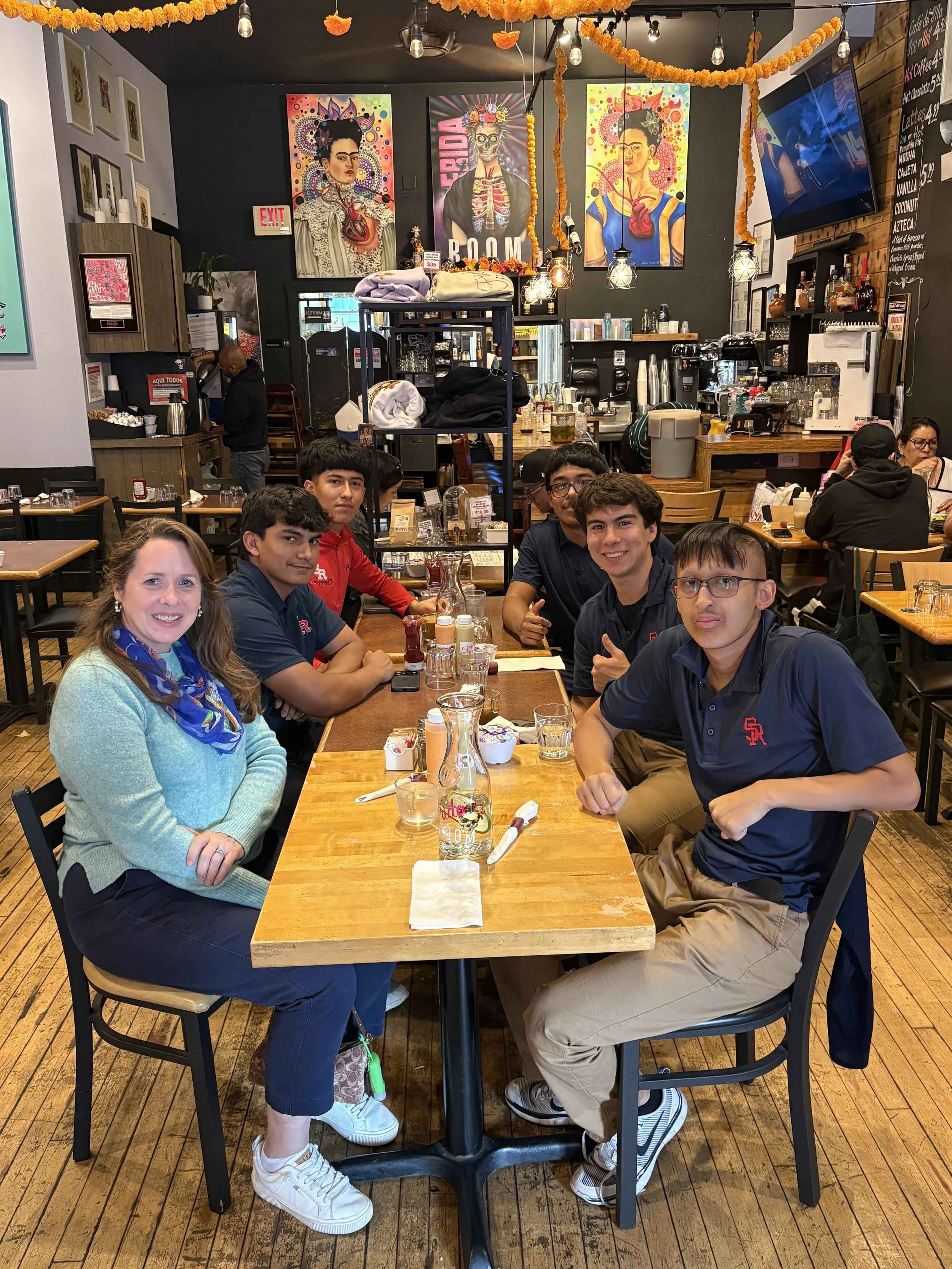
Lastly, students in Mrs. Earley’s AP Spanish Language and Culture class deepened their understanding by taking an educational field trip to the National Museum of Mexican Art, celebrating their 40th anniversary, to visit the Day of the Dead exhibit. The class also did a walking tour of the Pilsen neighborhood to view the beautiful murals across many of the buildings.
U.S. History
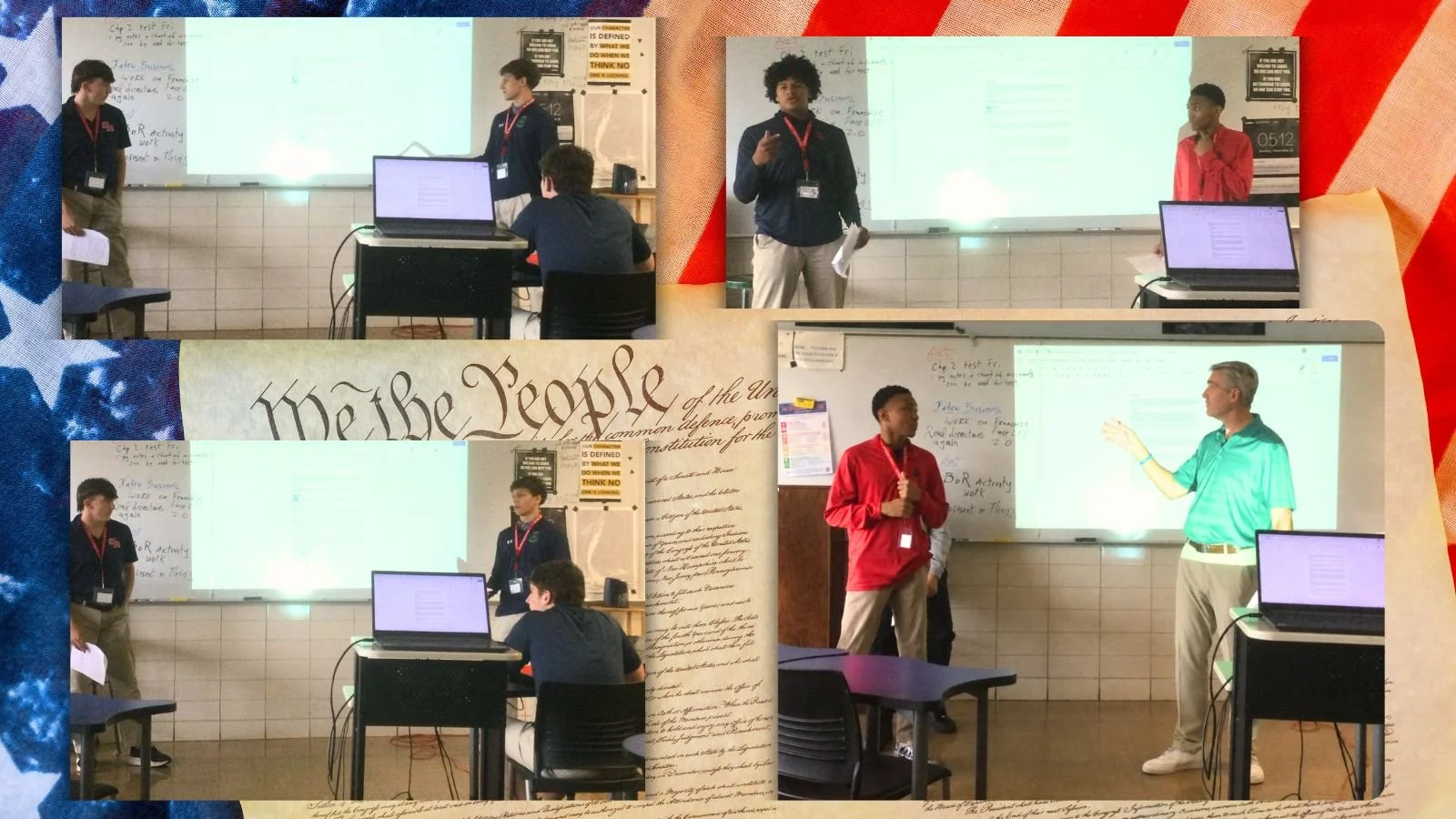
Mr. Conrath’s U.S. History students worked on a project evaluating the Bill of Rights and examining the amendments they believe have the most impact. Our Ritamen were given a scenario in which they had to save five of the first eight amendments and discard three. They had to present their findings to the class, justify their arguments, and engage with rebuttals from the class. This lesson moved students beyond simply memorizing the amendments by giving his juniors an opportunity to engage with the Constitution as a living document and think critically about the rights it protects.
Honors Geometry
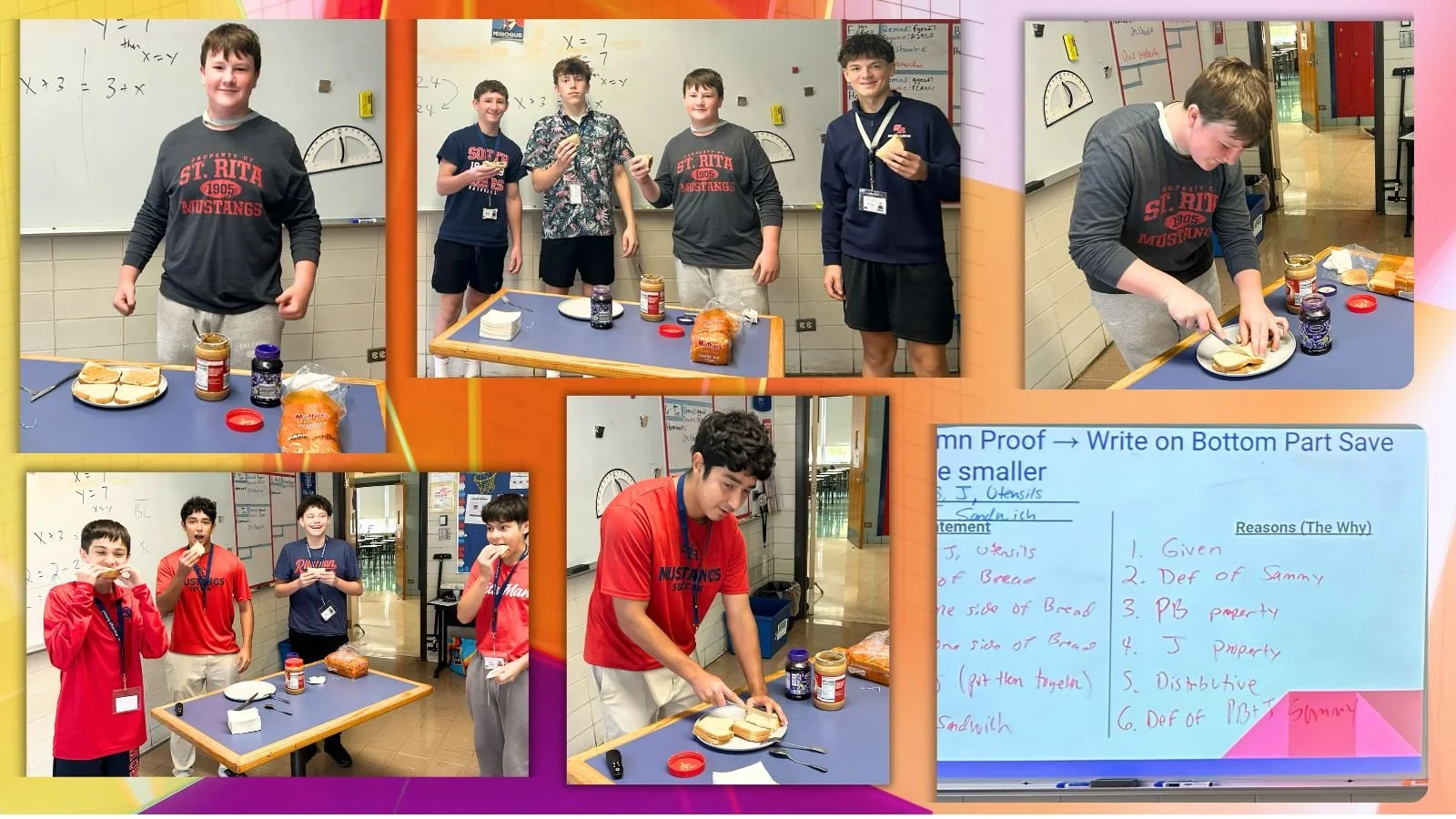
Mr. Bowers’ Honors Geometry students were introduced to geometric proofs by first building a two-column proof around something familiar: making a PB&J sandwich. Starting with the given supplies, our Ritamen had to justify each step needed to reach the final result. The activity made an abstract and challenging concept more approachable, perhaps especially if you were hungry, while reinforcing the importance of precise reasoning, logical sequencing, and justification.
Spanish Heritage II
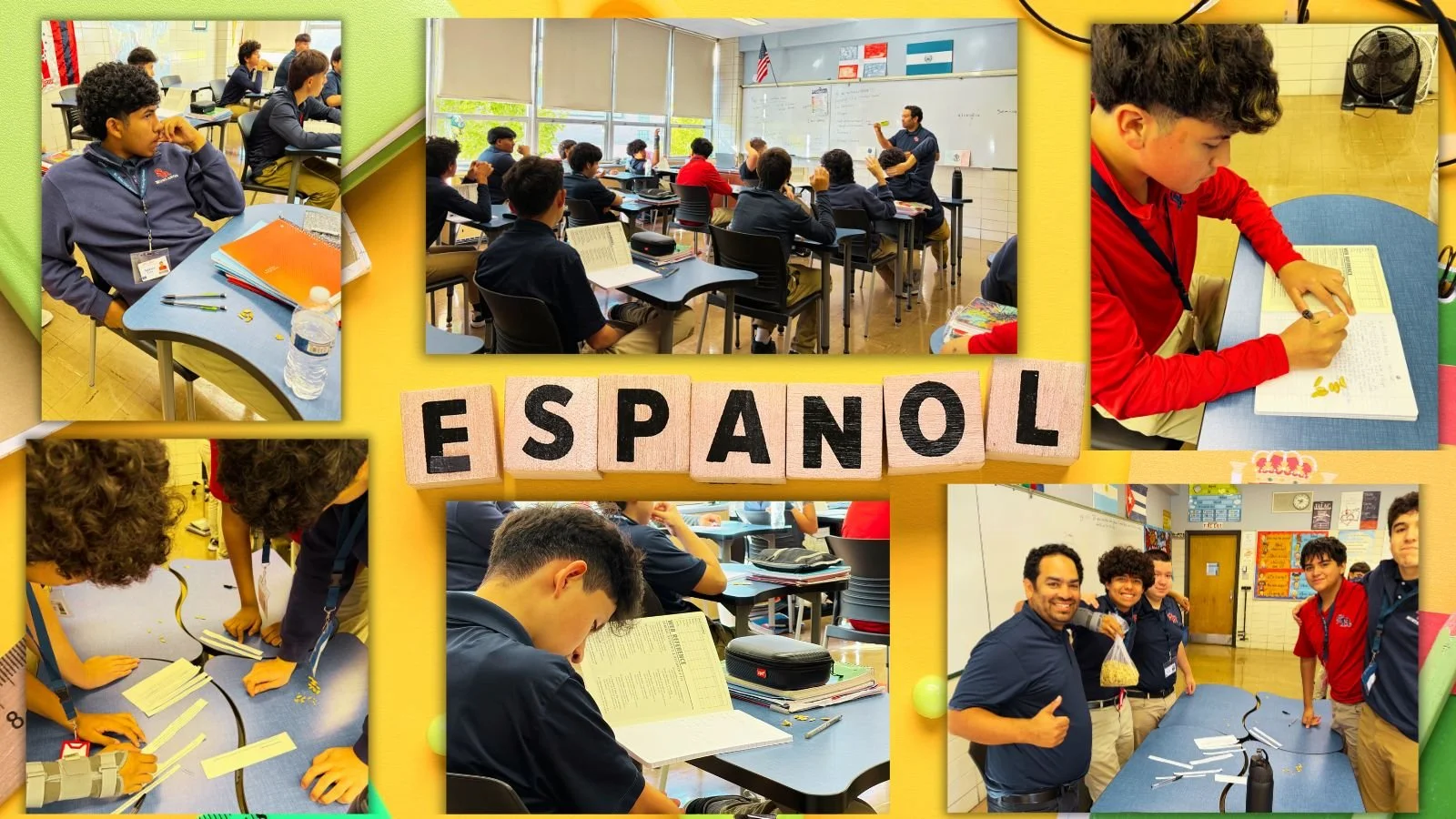
Mr. Godinez’s Spanish Heritage II students used an authentic food experience to strengthen their Spanish writing. After giving each Ritaman a handful of Mexican sunflower seeds, Mr. Godinez asked them to smell, feel, and taste the seeds and then journal in Spanish about memories or experiences they associated with them. One Ritaman said the smell reminded him of being in Mexico, while another connected the experience to memories of helping his grandmother plant her garden.
The activity gave students a meaningful, multisensory entry point into the writing task while encouraging them to connect Spanish language practice with their own experiences and culture. It was also a great example of our VAKT focus, particularly the use of tactile and other sensory experiences to help students access and process the lesson content.
Physical Education
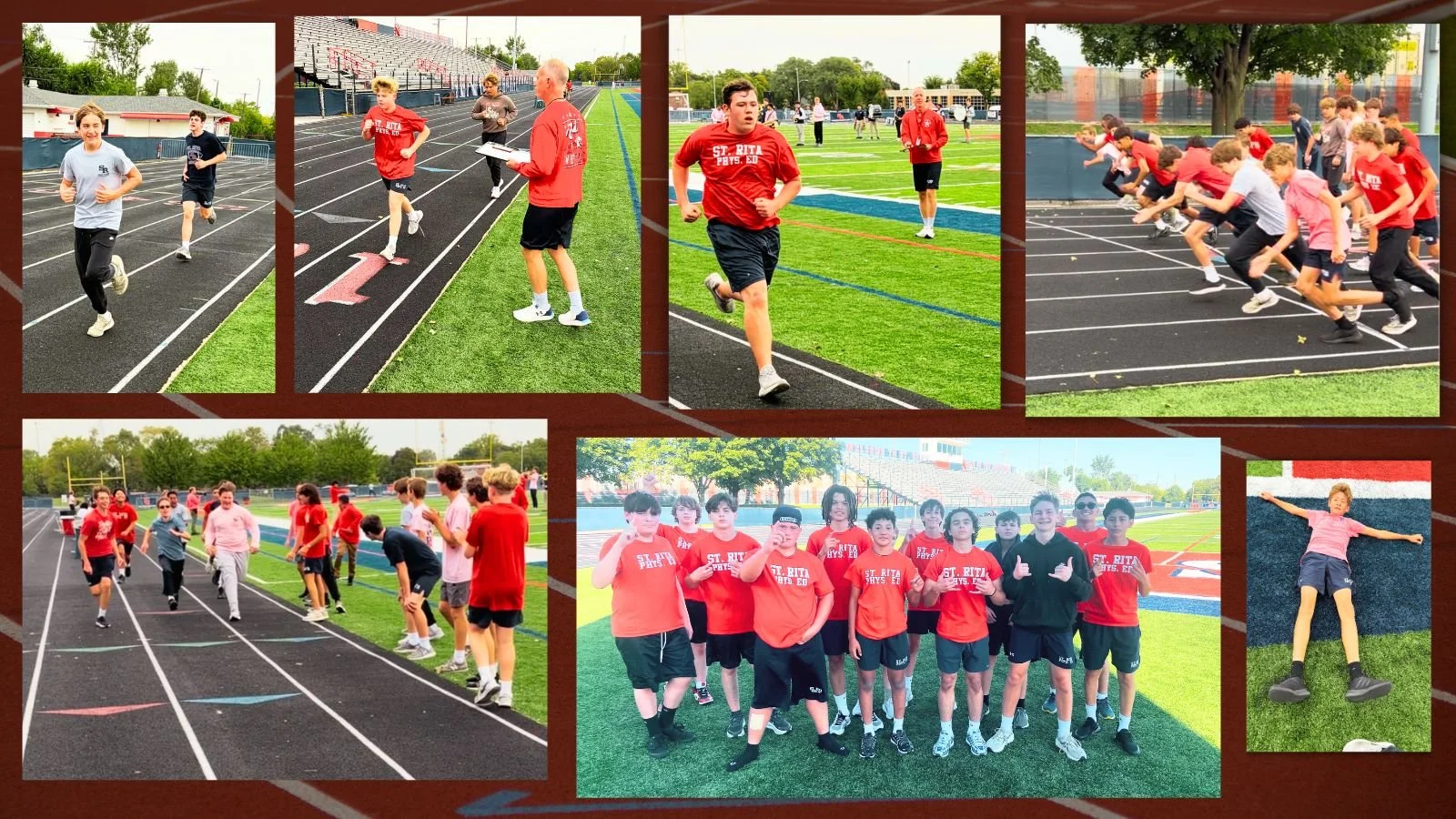
Tim’s PE classes spent the week preparing for Friday’s timed mile, with students working not only on endurance, but also on pacing, teamwork, and pushing through physical challenges. As part of the preparation, students practiced running together as a group, aiming to complete a mile as a class in under 9:30.
The week ended with an impressive individual accomplishment as Noel Reyes broke the longstanding PE mile record of 6:03 with a time of 5:54. Tim’s lesson is a strong example of the kinesthetic component of VAKT, giving students an opportunity to learn through movement while also developing perseverance, resilience, and the ability to challenge themselves.
Chemistry
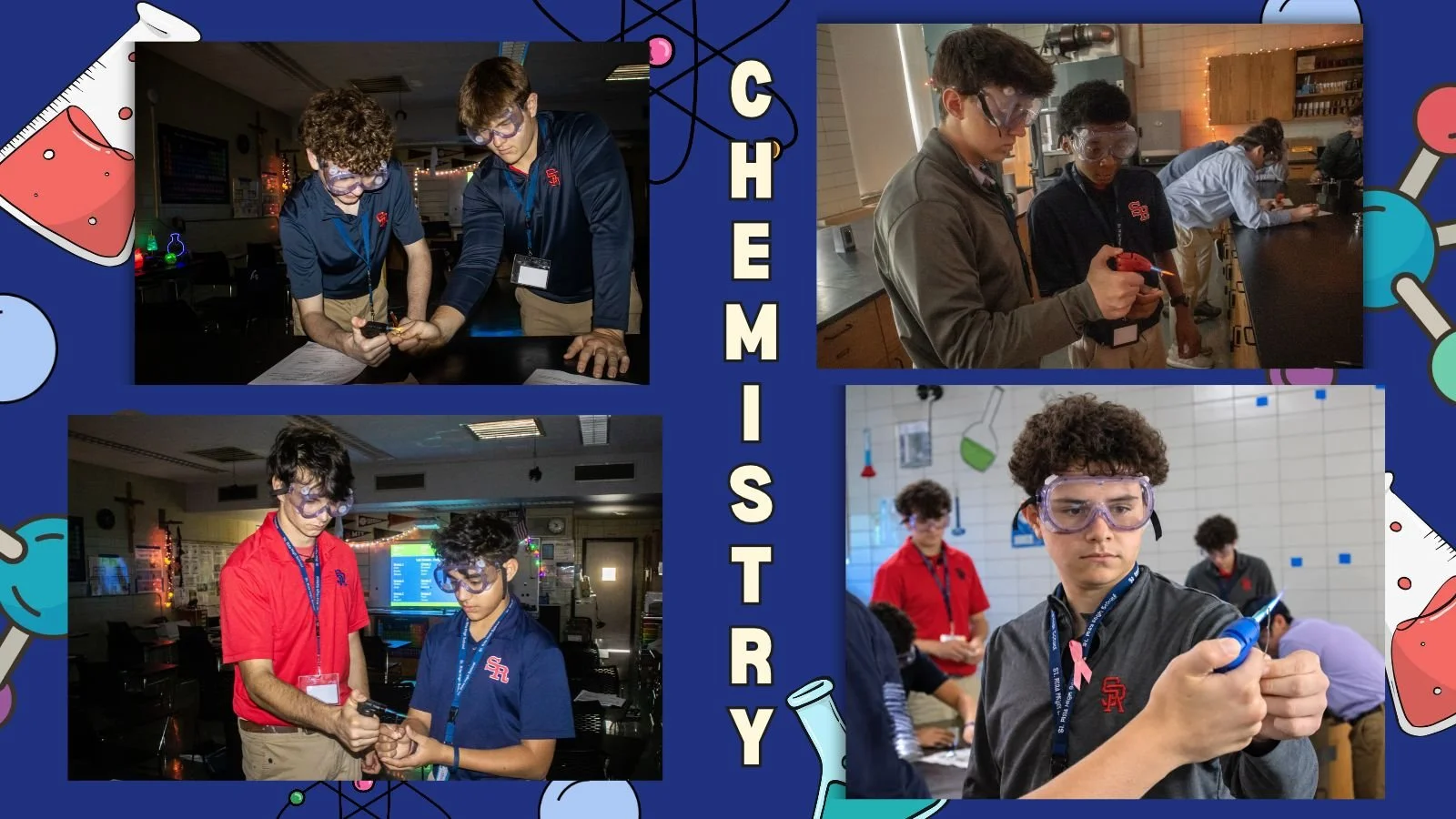
Diadra’s Chemistry students conducted flame tests to investigate the characteristic colors emitted by different elements. Students connected their observations to electron arrangement and movement between energy levels. The lab gave students a colorful, hands-on way to visualize an abstract chemistry concept while also connecting it to the different colors of visible light they encounter in the real world. Great job, Diadra, using the visual, tactile, and kinesthetic components of VAKT as students handled materials, conducted the tests, and observed the colors produced by each element.
Psychology
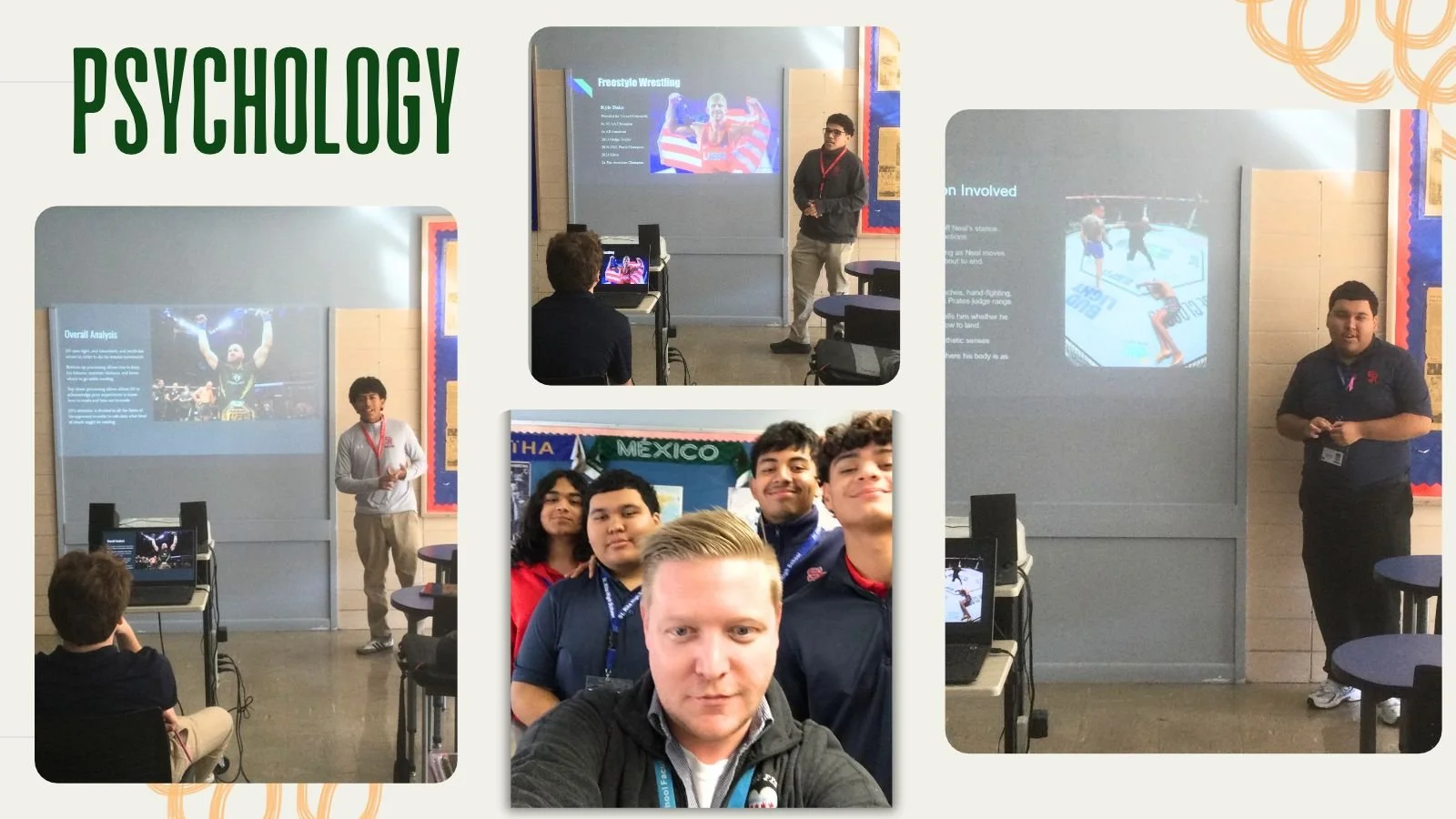
Jack’s Psychology students presented projects for their Sensation & Perception unit, analyzing how an athlete or performer uses touch, sight, kinesthetic, or vestibular senses to complete a specific skill. Students examined everyone from professional athletes and stunt performers to gamers and mixed martial artists, applying psychological concepts from class to real-world performance. The project is a good example of DOK 3 thinking, as students had to apply what they learned to analyze and explain a real-world situation rather than simply recall content. Great job, Jack, also giving students an opportunity to develop the presentation and communication skills emphasized in our Graduate Profile.
World History
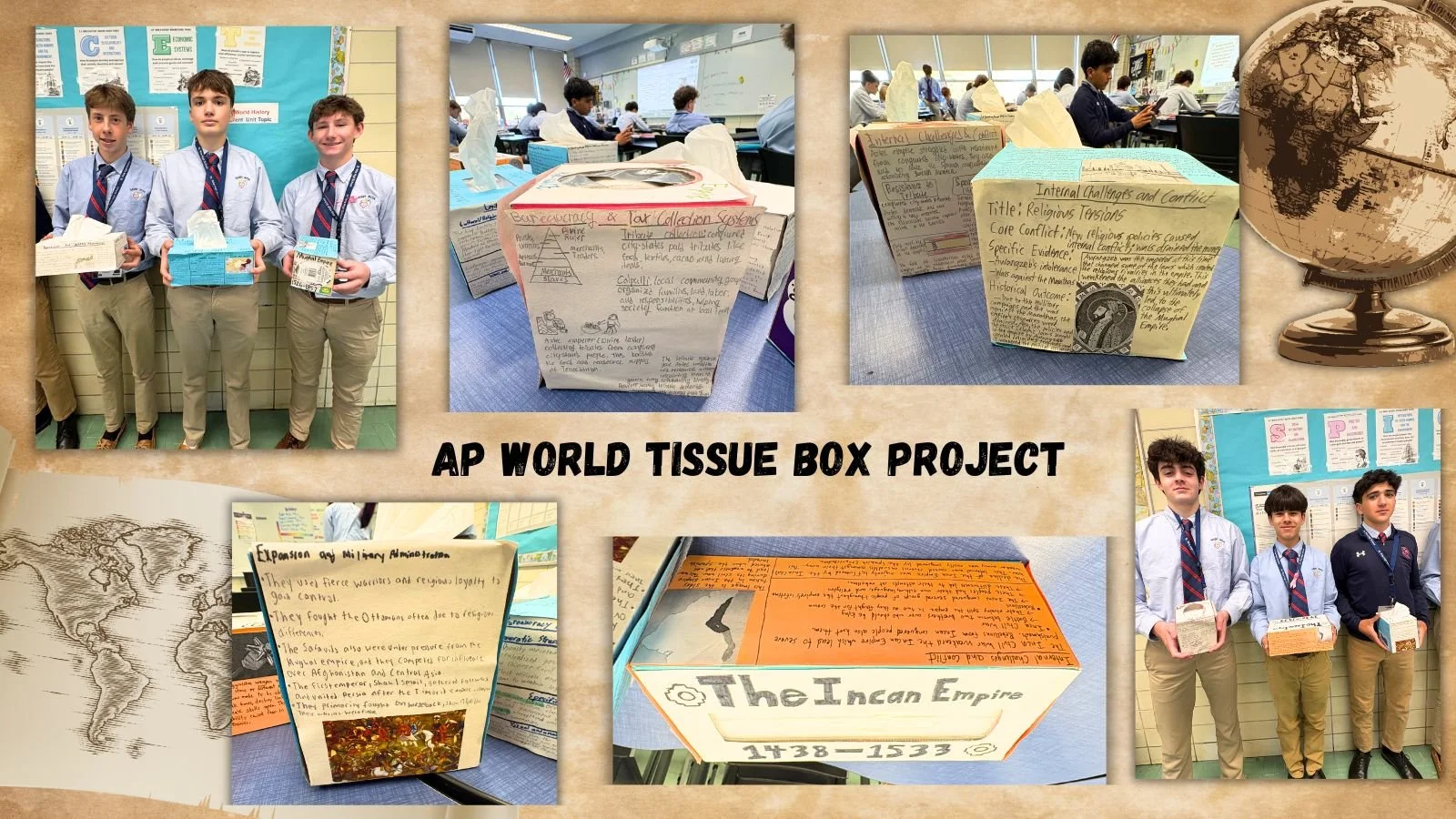
In Katie's World History class, they recently did a project on Land-Based Empires. Katie’s students were assigned different empires and created tissue-box projects analyzing key aspects of each one on the different sides. Students then examined their classmates’ projects and completed a chart comparing the empires and recording what they learned.
The activity gave students a chance to be creative while also practicing DOK 3 thinking, since they had to analyze, compare, and make connections across multiple empires rather than simply recall facts. Great job, Katie, combining creativity with higher-level thinking and application. As an added bonus, Room 204 is now well stocked for cold and flu season.
Honors English II
Jake’s Honors sophomores tackled an important skill they will need in college and beyond: how to write a strong thesis. As his students prepare literary analysis essays on The Iliad, Jake dedicated an entire class period specifically to teaching and developing this writing skill. Students learned what makes a strong thesis, practiced constructing their own, and received feedback before moving on to the next stage of the writing process.
Jake also designated the work as Level 0 AI and took the time to explain why relying on AI would prevent students from becoming stronger writers, because they would miss the opportunity to develop these foundational skills on their own. Jake's lesson is a great example of intentionally cultivating the "Communicates Well" capability and the essential skill of "clear writing" in our Graduate Profile.